The Model Context Protocol provides a standardized bridge between AI agents and external systems, allowing intelligent software to tap into databases, APIs, and business tools without custom-built connectors or manual coding. Originally open-sourced by Anthropic and rapidly adopted across fintech, enterprise, and infrastructure, MCP solves the integration bottleneck, letting applications interact dynamically through secure, real-time exchanges.
Core MCP Architecture and Capabilities
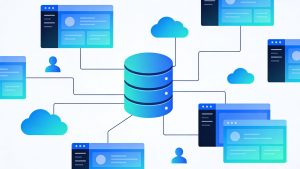
MCP employs a client-server approach, where the host application (often a large language model or agent) connects to an MCP server that exposes specific external functions, datasets, or repository access. The protocol operates over standardized message layers (JSON-RPC 2.0) and supports both local (STDIO) and remote (HTTP, SSE) integration paths, making it versatile for distributed cloud platforms and enterprise environments.
Why MCP Matters to Software Engineers
- Unified Connectivity: MCP simplifies how AI models access tools and data sources, reducing the need for repeated, project-specific integrations.
- Scalable, Modular Design: The separation of model, context, and protocol supports more adaptive, maintainable, and resilient software architectures—key for scaling agentic workflows and data operations.
- Real-Time, Secure Operations: The protocol enables continuous, live access to business data, improving automation, monitoring, and response times while maintaining robust security and auditability standards.
Real-World Impact: Payments and Beyond
Fintech organizations like Stripe and Adyen are pioneering MCP within payments infrastructure. By allowing business users and AI agents to manage APIs through natural language rather than manual coding, MCP empowers teams outside of engineering to streamline operational workflows and react faster to business opportunities. Its modularity makes it relevant across cloud management, compliance, analytics, and any API-rich sector.
Shaping the Next Decade of AI Integration
As MCP becomes an industry standard supported by leading AI platforms, it is set to transform software engineering roles from hands-on implementation to system supervision, strategic enablement, and auditing of AI-driven processes. The paradigm shift centers on defining clear intent, managing outcomes, and enabling continuous adaptation of software agents to evolving business requirements.
Conclusion
Model Context Protocol is redefining the interface between AI models and the broader digital ecosystem—making data exchange more seamless, secure, and future-proof for developers and organizations. Its adoption signals a move toward more modular, responsive, and agentic workflows, where software engineers focus on orchestration and strategy, not just implementation.
Read more such articles from our Newsletter here.