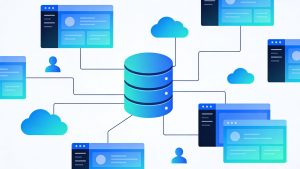
As software delivery demands intensify, organizations are shifting from fragmented toolchains to modern DevOps automation platforms that seamlessly integrate CI/CD, infrastructure as code, container orchestration, security, and real-time monitoring. These unified tools eliminate manual bottlenecks and accelerate software deployment across multi-cloud architectures.
Key Components of a Modern DevOps Automation Platform
Modern platforms provide end-to-end solutions that include:
- Continuous Integration and Continuous Delivery (CI/CD): Automate code builds, testing, and deployments.
- Infrastructure as Code (IaC): Manage infrastructure lifecycle across cloud providers using tools such as Terraform and Pulumi.
- Kubernetes Automation: Deploy, scale, and monitor containers efficiently.
- Observability: Centralized logging, performance monitoring, and alerting.
- Security & Governance: Policy enforcement, access control, and automated compliance.
By consolidating these features, teams accelerate software releases and minimize operational risks in complex multi-cloud, microservices environments.
Why Teams Are Adopting Unified DevOps Platforms in 2025
Organizations are switching for several reasons:
- Fragmented toolchains cause slowdowns and operational inefficiencies.
- Manual interventions increase deployment risks and reduce reliability.
- Lack of unified visibility makes debugging and monitoring more difficult.
- Legacy CI/CD tools struggle with complex, multi-cluster workloads.
- Cloud costs continue to rise without efficient automation and scaling controls.
Unified platforms empower teams to deploy faster, automate policy enforcement, optimize cloud spending, and deliver a seamless developer experience.
Core Features to Evaluate in DevOps Automation Platforms
Decision makers should prioritize:
- Unified CI/CD and deployment management with rollback support and integration with Git systems
- Kubernetes-native automation for scalable container management
- Dynamic IaC support for multi-cloud infrastructures
- Developer self-service portals that streamline environment provisioning and deployment
- Security and governance with policy-as-code and role-based access controls
- Built-in observability for end-to-end monitoring and alerting
- Analytics for resource utilization and cost optimization
Feature Comparison of Top DevOps Automation Platforms (2025)
Pro Tip: The optimal solution varies based on team size, cloud environment, and DevOps maturity. Large teams benefit greatly from all-in-one platforms that consolidate operations and enable greater ROI.
Benefits of Embracing DevOps Automation Platforms
Adoption leads to:
- Accelerated delivery, often cutting deployment time by 70%
- Predictable, repeatable results via infrastructure and pipelines as code
- Stronger security with built-in policy enforcement and role-based controls
- 20–40% reduction in cloud costs via automation and scheduling analytics
- Empowered developer productivity through streamlined, self-service tools.
Choosing the Right Platform
To select the best platform, consider:
- Integration with existing CI/CD, IaC, and Kubernetes stacks
- Scalability to meet future workload and team growth
- User-friendly interfaces and workflow templates for quick adoption
- Security compliance, RBAC, and secrets management
- Total cost of ownership, including licenses and automation savings.
Proof-of-concept pilots are recommended to verify CI/CD pipeline compatibility, deployment flows, and monitoring tools before full migration.
The Future of DevOps Automation (2025 and Beyond)
The next wave of platforms will be shaped by:
- AI-driven predictive automation for optimizing pipelines and resources
- Internal Developer Platforms (IDPs) enhancing self-service and governance
- Unified multi-cloud orchestration spanning AWS, Azure, GCP
- Policy-as-code and FinOps tools for compliance and sustainable cloud use
Early adopters of these trends are driving the future of software engineering and operational excellence.
Conclusion: Automate Smarter, Deliver Faster
DevOps automation platforms are crucial for modern teams seeking speed, safety, and efficiency. In 2025, success belongs to organizations that automate and orchestrate their entire delivery pipeline—integrating CI/CD, IaC, Kubernetes, and intelligent analytics into one streamlined ecosystem.
Read more such articles from our Newsletter here.